
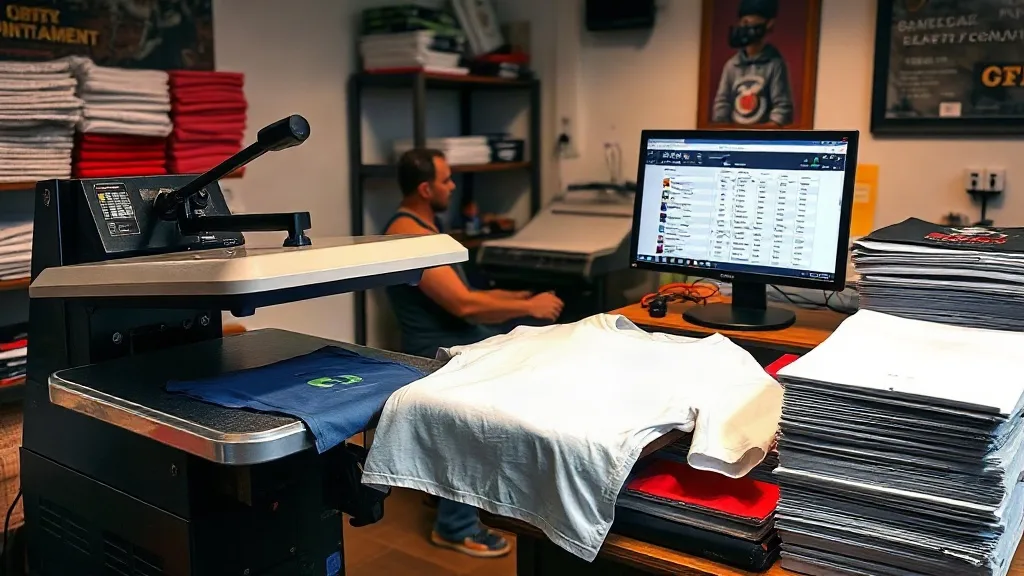
When you run a small print shop, mastering dtf transfers can be a game-changer for your business. But it's not just about producing vibrant, durable prints; it's also about pricing them right and managing orders efficiently so you actually make a profit. Many shops focus so much on the technical side that they overlook the financial and operational aspects, leading to frustration and thin margins. In this guide, we'll dive into the business side of DTF transfers, offering practical advice on pricing strategies, order management, and avoiding common pitfalls that eat into your bottom line.
The True Cost of a DTF Transfer
Before you can set a price, you need to know exactly what each transfer costs you. It's easy to underestimate, but every component adds up. Let's break down the expenses involved in producing a single DTF transfer.
Materials
The primary materials are the DTF film, ink, and adhesive powder. Film costs vary by quality and size, but a good estimate is around $0.50 to $1.00 per sheet (A3 size). Ink consumption depends on the design's color coverage; a full-color print might use $0.30 to $0.50 worth of ink. Powder is relatively cheap, perhaps $0.10 per transfer. So, materials alone could be $0.90 to $1.60 per A3 transfer.
Equipment and Maintenance
Your printer, shaker, and heat press are significant investments. Calculate depreciation and maintenance costs per transfer. For example, if your printer costs $5,000 and lasts for 50,000 prints, that's $0.10 per print. Add maintenance (cleaning, parts) at maybe $0.05 per print. Don't forget electricity; a rough estimate is $0.02 per transfer.
Labor
Time is money. How long does it take to print, powder, cure, and press a transfer? Suppose it takes 5 minutes of labor per transfer, and you pay yourself $20 per hour. That's about $1.67 per transfer. If you have employees, include their wages and benefits.
Overhead
Rent, insurance, software, and other overhead costs must be allocated. If your monthly overhead is $2,000 and you produce 1,000 transfers per month, that's $2.00 per transfer. This can vary widely, so calculate your own numbers.
Add it all up: materials ($1.25), equipment ($0.17), labor ($1.67), overhead ($2.00) = $5.09 per transfer. That's your break-even cost. You must charge more than this to profit.
Pricing Strategies for Profit
Now that you know your costs, how do you set a price that customers will accept while ensuring a healthy margin? Here are some strategies.
Cost-Plus Pricing
The simplest method: add a markup to your total cost. A common markup is 50% to 100%, but this depends on your market. If your cost is $5.09, a 50% markup gives a price of $7.64; a 100% markup gives $10.18. This ensures you cover costs and make a profit, but it may not reflect what customers are willing to pay.
Value-Based Pricing
Consider the value you provide. If your transfers are high-quality, durable, and come with excellent service, you can charge more. For example, if competitors charge $8 for a similar transfer but yours last longer and have better color vibrancy, you might charge $10 or $12. Emphasize your unique selling points.
Competitive Pricing
Research what other shops charge for comparable dtf transfers. If you're just starting, you might price slightly lower to attract customers, but avoid underpricing to the point where you lose money. Remember that competing solely on price is a race to the bottom; differentiate on quality and service.
Tiered Pricing
Offer different price tiers based on size, complexity, or quantity. For example, charge per square inch or offer discounts for bulk orders. This encourages larger orders and simplifies pricing. For instance, $0.05 per square inch for orders under 50, $0.04 for 50-100, and $0.03 for over 100.
Experiment with these strategies and adjust based on customer feedback and sales data. The goal is to find a sweet spot where you're competitive and profitable.
Managing Orders Efficiently
Once you have pricing sorted, you need to handle orders without chaos. Efficient order management saves time, reduces errors, and improves customer satisfaction.
Use Order Management Software
Invest in software that tracks orders from receipt to delivery. Tools like Printavo, Shopworks, or even a well-organized spreadsheet can work for small shops. Key features: order tracking, customer database, invoicing, and inventory management. This helps you avoid double-booking, lost orders, and missed deadlines.
Standardize Your Workflow
Create a step-by-step process for handling orders. For example: receive order, confirm design and specifications, generate invoice, schedule production, quality check, package, and ship. Document this workflow and train your team. Consistency reduces mistakes and speeds up production.
Batch Similar Orders
If you have multiple orders with similar designs or colors, batch them together to save time on setup and cleaning. For instance, print all orders using the same film type or ink set in one go. This reduces waste and increases efficiency.
Communicate Clearly with Customers
Set clear expectations about turnaround times, pricing, and shipping. Use automated emails to confirm orders and provide updates. If there's a delay, inform the customer proactively. Good communication builds trust and reduces complaints.
Track Your Metrics
Monitor key performance indicators (KPIs) like average order value, production time per order, and profit margin. Use this data to identify bottlenecks and optimize your process. For example, if you notice that a certain design takes longer to produce, you might adjust its price or streamline the workflow.
Common Pitfalls in Pricing and Order Management
Even experienced shops fall into traps. Here are some mistakes to avoid.
Underpricing
The most common mistake is not accounting for all costs, especially labor and overhead. This leads to working hard but not making money. Always calculate your true cost and ensure your price covers it plus a profit margin.
Not Charging for Setup or Design
If you offer design services or require setup for custom orders, charge for it. Time spent on design or file preparation is valuable. Many shops include a setup fee or minimum order to cover these costs.
Ignoring Shipping Costs
Shipping can eat into profits if not calculated correctly. Either charge actual shipping costs or build them into your pricing. Offer free shipping only if you've accounted for it in the price.
Overcomplicating Pricing
While tiered pricing can be effective, too many tiers confuse customers and complicate your bookkeeping. Keep it simple: perhaps three tiers based on quantity or size.
Failing to Upsell
Offer related products or services, such as garment blanks, additional colors, or rush orders. Upselling increases average order value and profitability.
Leveraging dtf transfers near me for Local Business
If you operate a local print shop, you can attract customers searching for dtf transfers near me. Optimize your website for local SEO by including your location and service area. Encourage satisfied customers to leave reviews on Google and social media. Offer local pickup or fast turnaround to compete with online retailers. Building a local reputation can lead to repeat business and word-of-mouth referrals.
Conclusion
Pricing and order management are just as important as print quality when it comes to running a successful DTF transfer business. By understanding your costs, choosing a pricing strategy that works for your market, and streamlining your order process, you can increase profitability and reduce stress. Remember to avoid common pitfalls and always look for ways to improve efficiency. With the right approach, your DTF transfers can become a reliable source of income for your shop.
Frequently Asked Questions
How do I calculate the cost per DTF transfer accurately?
To calculate the cost per DTF transfer, sum up all direct and indirect costs: materials (film, ink, powder), equipment depreciation and maintenance, labor (time spent per transfer), and overhead (rent, utilities, etc.). Divide your total monthly costs by the number of transfers produced to get a per-unit cost. Be thorough and include everything.
What is a reasonable profit margin for DTF transfers?
A reasonable profit margin varies by business size and market, but many small print shops aim for a 30% to 50% gross margin. This means your selling price should be at least 1.5 to 2 times your total cost. However, consider your value proposition and competitive landscape; higher quality and service can justify higher margins.
How can I streamline order management for my DTF business?
Use order management software to track orders, automate invoicing, and manage customer data. Standardize your workflow with clear steps from order intake to shipping. Batch similar orders to save time. Communicate clearly with customers about timelines and provide tracking information. Regularly review your process for bottlenecks and inefficiencies.
Should I offer discounts for bulk orders?
Yes, offering bulk discounts can encourage larger orders and improve cash flow. However, ensure that the discounted price still covers your costs and yields a profit. Calculate your break-even point for bulk orders and set discounts accordingly. Tiered pricing based on quantity is a common approach.
How do I compete with online DTF transfer suppliers?
Compete by offering faster turnaround, local pickup, personalized service, and higher quality. Emphasize your expertise and ability to handle custom requests. Optimize your online presence for local searches like "dtf transfers near me" to attract local customers. Build relationships with local businesses and offer special promotions.